
Introduction
Vacuum adsorption coating technology is widely used in the precision preparation of new energy electrodes, functional films, optical coatings and other fields. The viscosity of the coated slurry is a key process parameter that affects coating uniformity, thickness control, and final product performance. There were significant differences in the rheological behavior, transfer mechanism and process window of slurries of different viscosities during vacuum adsorption coating. The purpose of this paper is to systematically discuss the process adaptability, key control points and common problems of slurries with different viscosity ranges on vacuum adsorption coating machines, and provide technical reference for process optimization.
Vacuum adsorption coating principle and the influence of viscosity
The vacuum adsorption coating machine stably adsorbs the substrate on the coating roller or conveyor belt through the negative pressure generated by the back roller or cavity, and at the same time coats the slurry on the surface of the substrate through a precision metering system (such as slit extrusion, microgravure, etc.). Slurry viscosity (η) directly affects the fluid dynamics during the coating process. Low-viscosity slurry (usually η < 1000 mPa·s) has good fluidity and is easy to spread, but it is easy to produce sagging and edge effects. High-viscosity slurry (η > 10000 mPa·s) has strong cohesion and good shape retention, but requires higher transfer force and is prone to coating streaks or uneven thickness.
The thickness of the coating wet film (h) is related to the viscosity of the slurry, the coating speed (v), the knife gap or slit pressure (P), and the simplified relationship can be approximately expressed as: h ∝ (P · v) / η. This indicates that the thickness of the wet film is inversely proportional to the viscosity at the fixed pressure and velocity.
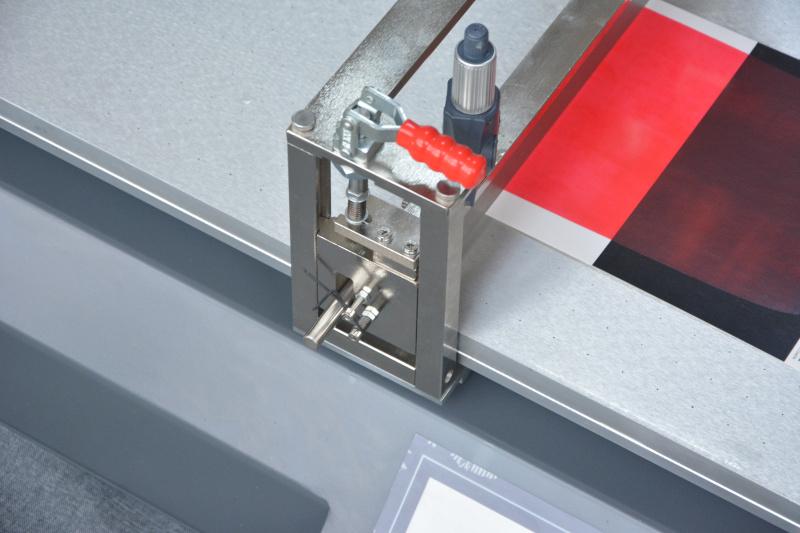
Coating process window for slurries of different viscosities
Depending on the slurry viscosity range, the process settings need to be adjusted accordingly. The following are the key points of the process for typical viscosity ranges.
| Viscosity range (mPa·s) | Typical slurries are examples |
| 100 - 1,000 | Some low-solids contain conductive inks and varnishes |
| 1,000 - 5,000 | Lithium electrode paste (medium and low solid content) |
| 5,000 - 20,000 | High solids electrode paste, ceramic paste |
| > 20,000 | Polymer thick film slurry, paste colloid |
| Process parameters | Low viscosity slurry of concern |
| Adsorption vacuum | It should be moderate, too high may cause the substrate to deform or the slurry to be sucked into the micropores |
| Coating speed | It can be higher, but it needs to prevent splashing and turbulence |
| Drying conditions | Gentle drying is required in the initial stage to prevent surface crust from causing internal solvent retention due to too rapid crushing |
| Common defects | Drains, thick edges, pinholes |
| Process parameters | High viscosity slurry focus |
| Adsorption vacuum | It needs to be higher to ensure that the substrate is flat to withstand large shear forces |
| Coating speed | Usually low, ensuring adequate transfer and leveling of slurry |
| Drying conditions | It can withstand strong hot air, but it is necessary to pay attention to stress cracking caused by temperature gradients |
| Common defects | Stripes, uneven thickness, dry spots |
Key process parameter optimization strategies
For slurries with different viscosities, the following parameters need to be co-optimized:
1. Vacuum Control:The vacuum adsorption force needs to match the shear stress of the slurry. For high-viscosity slurries, sufficient vacuum prevents displacement of the substrate under coating head pressure; For low-viscosity slurries, excessive vacuum can suck the slurry through the porous substrate, disrupting coating continuity. It is recommended to perform gradient tests based on the air permeability of the substrate and the viscosity of the slurry.
2. Coating Head Design and Setup:The lip clearance (G) and feed pressure of the slit coating head should be adjusted according to the viscosity. High viscosity slurries often require larger clearance and higher feed pressure, and the relationship can be roughly described by the flow of the Poisu leaf: Q = (W · G³ · ΔP) / (12 · η · L), where Q is the volumetric flow, W is the coating width, ΔP is the pressure difference, and L is the lip length. Low-viscosity slurries require more precise lip flatness and clearance control.
3. Substrate Tension and Temperature:The tension of the substrate affects its fit with the adsorption roller. Moderate preheating of the substrate before coating (Tsub) can reduce the apparent viscosity of high-viscosity slurries and improve leveling, but attention should be paid to the effect of temperature on the stability of slurries. Empirically, Tsub It should be lower than the boiling point of the slurry solvent, and the temperature should be uniform.
Common defect analysis and solution ideas
Coating defects are often related to mismatches between slurry rheological characteristics and process conditions.
| Defect type | Possible cause (associated viscosity) |
| Longitudinal stripes | Local blockage or pressure fluctuation of the coating head at high viscosity; Low viscosity lower mold lip contamination |
| Thickness fluctuations | uneven vacuum adsorption (high viscosity dominant); The slurry supply pressure is unstable |
| Edges thickened | Low viscosity slurry surface tension is caused; At high viscosity, the flow rate may vary due to the edge |
| Dry spots/uncoated | Insufficient transfer of high-viscosity slurry; The surface of the substrate can be too low or contaminated |
Solutions include optimizing the slurry formulation (e.g., adding rheology additives to adjust the viscosity profile), ensuring the parallelism of the coating head to the back roller, regularly cleaning and maintaining the system, and implementing in-line viscosity and thickness monitoring for closed-loop control.
Summary and outlook
The successful application of vacuum adsorption coating process relies on an in-depth understanding of the viscosity characteristics of slurry and the fine adjustment of the corresponding process parameters. Low-viscosity slurry processes should focus on flow and drying uniformity, while high-viscosity slurries should focus on transfer integrity and shear management. In the future, with the in-depth application of online rheological monitoring, adaptive control system and computational fluid dynamics simulation, the coating process control for complex non-Newtonian fluid slurries will develop in a more accurate and intelligent direction.
References
1. Coating Technology Basics and Applications, Chemical Industry Press.
2. The Guiding Role of Rheology in Coating Processes, Journal of Materials Science and Engineering.
3. Research on the process parameters of precision slit coating, compilation of relevant technical standards at home and abroad.
4. Coating Quality Control in New Energy Electrode Manufacturing, Battery Industry Technical White Paper.