
Overview
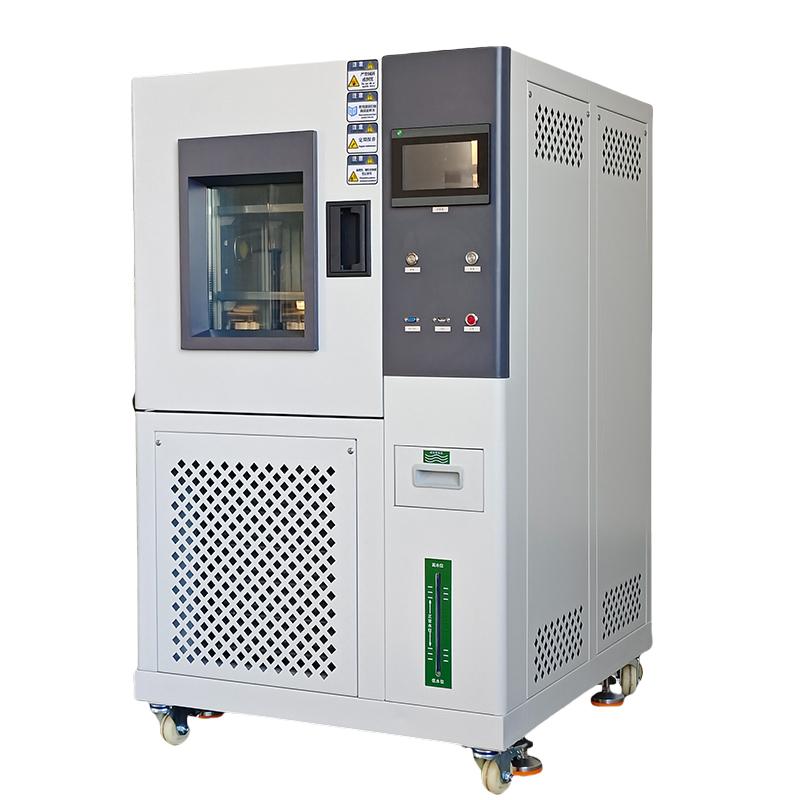
A constant temperature and humidity chamber is a laboratory and industrial testing equipment used to simulate and accurately control specific temperature, humidity and environmental conditions. Its core function is to provide a consistently stable and uniformly controlled Climatic environment for sample testing to evaluate the performance, reliability, or storage stability of materials, electronic components, biological products, and more under various temperature and humidity conditions. The selection and use of this equipment must strictly follow relevant national and international technical standards (such as GB/T, IEC, JJF series standards) to ensure the reproducibility, reproducibility and measurability of test conditions, which is the basis for ensuring the accuracy and comparability of test results.
Uses:
Thermostatic and humidity chambers are widely used in research and development, quality control, and validation where precise control of environmental parameters is required. Its main uses can be divided into two main categories:
Experiment test
It is used for electrical and electronic products, auto parts, aerospace devices, metal materials, plastics and coatings to carry out high temperature resistance, low temperature resistance, humidity and heat resistance and alternating humidity and heat resistance, and assess their environmental adaptability and reliability.
Culture and storage
Used for microbial culture (e.g., bacteria, molds), cell culture, plant breeding, pharmaceutical stability testing, and storage under specific conditions for certain sensitive materials (e.g., media, reagents). Different applications have significant differences in the parameter range and accuracy requirements of the equipment.

Type
According to different application scenarios and technical characteristics, constant temperature and humidity boxes are mainly classified in the following ways:
By application and temperature and humidity range:
Constant temperature and humidity test chambers – usually have a wide temperature range (e.g. -70℃ ~ +150℃) and humidity range (20%~98%RH) for harsh environment testing.
Constant temperature and humidity incubators - the temperature range is usually around normal temperature (such as 0℃ ~ 50℃ or -5℃ ~ 50℃), and the humidity range is mostly 50%~95%RH, focusing on the culture in the biological field.
Drug stability test chamber - in addition to controlling temperature and humidity, some models can also control light, ultraviolet and other factors, which is dedicated to the pharmaceutical industry.
By structural form:
It can be divided into benchtop and vertical. Vertical devices typically achieve lower temperatures (below normal temperature) and a wider humidity range, while desktop devices are often used in scenarios where space is limited or requires relatively simple requirements.
By Control System:
It is divided into programmable (multi-stage programming) and fixed value. The programmable controller can execute complex temperature and humidity cycle change programs to simulate a more realistic alternating environment. The fixed value is used to maintain a single set point.
Measurement principle
The constant temperature and humidity chamber realizes the comprehensive regulation of the climate environment in the workspace by integrating refrigeration, heating, humidification, dehumidification and air circulation systems.
Temperature control
An in-box temperature sensor (usually a platinum resistor) collects data and transmits it to the controller. The controller heats or cools the air in the box by adjusting the heater output or the working state of the refrigeration compressor (and solenoid valve) to achieve the set temperature.
Humidity control
Humidification- Sink evaporative humidifier is usually used, which generates water vapor by heating the sink and is brought into the box by a circulating fan to increase relative humidity.
Dehumidifying——Mainly adopt the principle of mechanical refrigeration and dehumidification. Cool the air below the dew point temperature to allow the supersaturated water vapor to condense and preact, thereby reducing humidity.
Air circulation
The centrifugal fan drives the forced circulation of air in the cabinet, flowing through heaters, refrigeration evaporators, humidifiers, and other components, ensuring uniformity and stability of temperature and humidity in the workspace.
How to choose
Choosing a constant temperature and humidity chamber is a systematic project that requires comprehensive consideration based on test standards, sample characteristics, and laboratory conditions. The key selection elements are shown in the table below:
| Select a dimension | Core considerations and explanations | References/Standards |
| Core parameters | Temperature/humidity range: must cover and slightly wider than the test standard requirements. Note that the nominal minimum temperature of the equipment usually refers to the no-load capacity, and the sample load needs to be considered for actual use. | Test specifications (such as GB/T 2423.3)-1 |
| Uniformity: After stabilization, the maximum difference between temperature and humidity at any two points in the working space at the same time. The smaller the value, the more consistent the environment inside the box. | JJF 1101-2019 Requires assessment-5-8 | |
| Volatility: After stabilization, the temperature and humidity of a certain point in the workspace change over time. The smaller the value, the more stable the control. | JJF 1101-2019 Requires assessment-8 | |
| Deviation: The difference between the measured average and the set value of the center point of the workspace. | JJF 1101-2019 Calibration Items-8 | |
| Sample vs. load | Workspace Size: The sample volume should not exceed 1/3 of the effective volume of the studio to ensure airflow-9. Keep the sample at least from the box wall 5-10cm-8。 | Rule of thumb, GB/T 2423 Recommendation-10 |
| Sample characteristics: whether the sample is heated, hygroscopic/dehumidified, corrosive gases are released, etc., which will affect the load and may require special liner materials or ventilation devices. | - | |
| Compliance and validation | Calibration Specifications: Equipment should comply with JJF 1101-2019 requirements. The new regulations emphasize the use of platinum resistance sensors (non-thermocouples) for calibration and put forward clear requirements for fluctuation and uniformity measurements-8. | JJF 1101-2019-5-8 |
| Performance Qualification: Refer to IEC 60068-3-5/-3-6 and other standards, confirm the cabinet performance -2 through multi-point measurement (such as the 9-point method). | IEC 60068-3-5,-3-6-2 | |
| Critical components and safety | Sensor: The main temperature sensor is platinum resistor; Humidity sensors are available in wet and dry bulb type (wet bulb gauze needs to be changed regularly) and capacitive type, the latter of which is easy to maintain-4. | - |
| Refrigeration system: Choose a single-stage or double-stack compressor according to the minimum temperature and cooling rate requirements. Air-cooled type is common, and water-cooled type is suitable for high-power or heat-loaded scenarios-10. | - | |
| Safety protection: It should have multiple protection functions such as over-temperature, over-humidity, compressor overload, leakage, and water shortage-7. | - |
How to use
Standardized operation and maintenance are the keys to ensuring long-term stable operation of equipment and reliable test results.
1. Installation and preparation
The equipment should be placed in a well-ventilated indoor environment without direct light, away from heat sources and with a flat floor. Make sure the power supply voltage matches and is reliably grounded. After the first use or long-term inactivity, no-load calibration should be performed. Before use, check the water level of the humidifier tank and ensure that the water tank of the wet and dry bulb system (if applicable) is filled with clean water.
2. Operation process
Power on and start until the controller self-test is completed.
Parameters such as target temperature, humidity and running time are set through the controller panel. For programmable devices, the test profile program needs to be edited in advance.
Place the samples reasonably in the workshop to avoid accumulation and blocking the air duct.
Start the trial procedure. Minimize the number and time of opening the box door during operation.
After the test, turn off the equipment according to the specifications and take out the sample.
3. Maintenance and calibration
Routine maintenance
Keep the inside and outside of the box clean; Regularly check whether the humidifying water tray and condenser are clean; Check whether the wet ball gauze is clean and soft, and it needs to be changed regularly.
Calibrate regularly
According to the JJF 1101-2019 specification, it is recommended to perform a third-party calibration performed by a qualified organization at least once a year to verify that key performance indicators such as temperature, humidity deviation, uniformity, and fluctuation are consistently met. Calibration reports are an important support for data validity.
Safety precautions
It is forbidden to test dangerous goods such as explosives, flammable materials, and strong corrosiveness. After the compressor is stopped, it should be restarted at an interval of more than 5 minutes to prevent damage.
Epilogue
As a key environmental simulation equipment, the selection of constant temperature and humidity chamber is essentially the process of transforming test standards and sample requirements into specific technical indicators. Successful selection is inseparable from a deep understanding of the core performance parameters (range, uniformity, fluctuation) and strict adherence to current national metrology specifications (e.g., JJF 1101-2019) for verification. Users should establish a sense of full-process management from equipment procurement and acceptance, daily standardized operation to regular measurement and calibration to ensure that the equipment is always under control, so as to provide reliable environmental conditions for material research, product reliability assessment and quality control.