
In the preparation of perovskite solar cells, the coating method is a key factor in determining the quality of the film. Currently, the two most commonly used methods in laboratories—rotary coating and scraping—differ in principle and suitable for very different scenarios. Which one to choose is not about which is "better," but which better matches the current experimental goals.
The spin coating method is the most mature and widely used technology in perovskite research. The operation is simple: drop the precursor solution onto the substrate, then rotate at high speed. Centrifugal force will flush out the excess solution, leaving a uniform wet film. By adjusting speed, acceleration, and spin coating time, it is easy to obtain films with uniform thickness and smooth surfaces on small-area substrates. Because it is stable, controllable, and reproducible, most perovskite efficiency records are achieved using spin coating.
However, the spin coating method has two unavoidable shortcomings. First, there is severe solution waste. At high speed, most of the precursor solution is thrown off the substrate, and material utilization is usually less than 10%. If the cost of precursor synthesis is very high, this becomes a problem. Second, it is difficult to scale. The uniformity of spin coating film formation depends on centrifugal force, which naturally differs between the base center and the outer edge. The larger the substrate area, the more pronounced this difference is, and the harder it is to ensure uniform film thickness. In practice, it is difficult to create satisfactory films on substrates with side lengths exceeding 5 centimeters. Therefore, spin coating is essentially a technology oriented toward basic research—suitable for small-area devices, exploring new material systems, and optimizing interface energy levels, but not suitable for large-area applications, let alone integration with industrialized processes.

The scraping method took a different path. It does not rely on centrifugal force, but uses a scraper or scraper to maintain a fixed narrow gap between the base and moves relative to spread the solution into a wet film. This difference in principle brings two clear advantages. First, high material utilization efficiency. Most of the solution remains on the substrate, with utilization rates exceeding 90%, which is very cost-effective for expensive precursors. Second, good scalability. The film formation process does not depend on substrate size; as long as the coating equipment has a long enough stroke, uniformity can be maintained over a larger area. This gives the scraping method the potential to be compatible with roll-to-roll printing processes, making it one of the mainstream pathways for continuous production of perovskite films. In recent years, many research teams have used scraping methods to create devices with efficiencies exceeding 20% on substrates of just a few centimeters or even tens of centimeters, and the efficiency of large-area modules continues to rise.
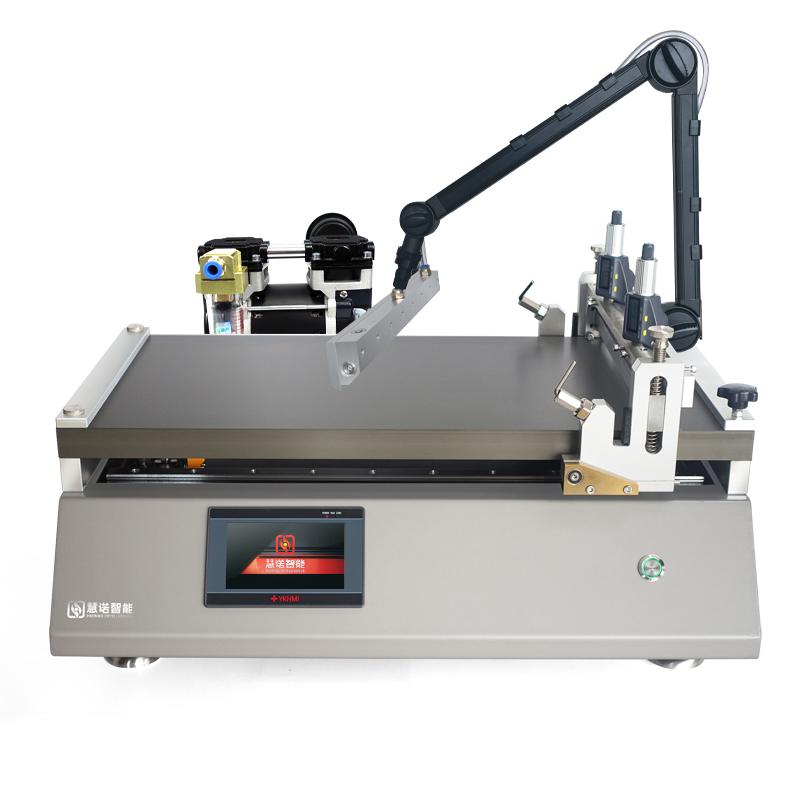
However, the scraping method is not something that can be used just by applying it. It has a core challenge: the drying and crystallization process of wet films is much slower than spin-coating. The strong convective evaporation caused by high-speed rotation in spin coating helps the solvent evaporate quickly and nucleation rapidly, while the film formation process in scraping is relatively "quiet," with slower solvent evaporation and a longer time window for perovskite crystallization. This feature itself is not a bad thing, but it is highly sensitive to process conditions—solvent ratio, type of additives, coating speed, squeegee gap, substrate temperature, and ambient atmosphere—each of which can affect the final film's morphology and crystal quality. If not properly adjusted, pinholes, incomplete coverage, or uneven grain sizes can easily occur. Therefore, choosing the scraping method usually means spending considerable time optimizing the process upfront, and the experimental threshold is much higher than rotary coating.
To sum up. If your experimental goal is to quickly screen materials, validate new concepts, or pursue efficiency on small areas, spin coating is a time- and labor-saving choice. If you want to work on large-area devices, assess the commercialization potential of the process, or fabricate large-size films for integrated applications, although the process is more complex, scraping is the right direction. There is no superiority or inferiority between the two; they simply serve different research stages and objectives.