
Key points for equipment calibration
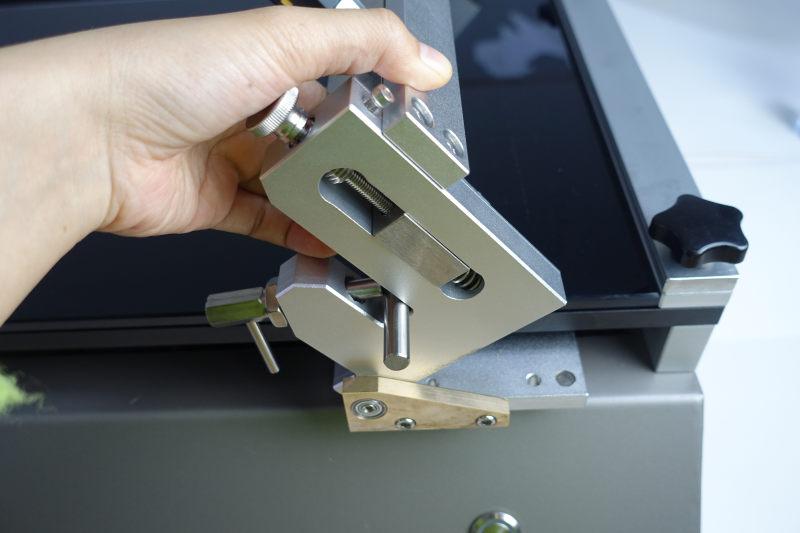
The squeegee coating machine applies liquid glue to the PI film substrate, with equipment calibration being the fundamental step. The gap between the squeegee and the substrate directly affects the coating thickness and usually needs to be adjusted according to the adhesive viscosity and target thickness. In practice, refer to the coating thickness control specification in ASTM D823 and use a micrometer to measure gaps at both ends and in the middle of the squeegee, ensuring errors are controlled within ±2 microns. Experienced engineers often test apply it on a discarded PI film first, observe the uniformity of the coating, and then fine-tune the blade level. This is like a carpenter using a plane to adjust a planer before planing a plank—a tiny error can lead to a huge error. When the adhesive viscosity is high, the squeegee gap should be appropriately increased; otherwise, stringing or streaks may form; Conversely, when viscosity is low, if the gap is too small, the coating may be too thin or even missed. A case shows that in one polyimide laminate fabrication, the engineer failed to calibrate the level at both ends of the scraper, resulting in a coating thick on one side and a thin on the other. After subsequent curing, warping occurred, but the problem was ultimately resolved through recalibration.
Glue characteristics match
The rheological properties of liquid glue have a decisive impact on the coating effect. PI film itself has low surface energy and high heat resistance, so the glue must have good wettability and adhesion. Referring to the technical paper "Effect of Polyimide Film Surface Treatment on Adhesive Wetability," adhesives with surface tension below 35 mN/m are easier to spread on PI. When making actual selections, attention should be paid to the glue's thixotropy index and viscosity varying with shear rate. Highly thixotropic glue loses viscosity after exposure to shear forces during coating, which is beneficial for leveling, but it quickly recovers after stopping shearing, preventing sagging. This is similar to the calligraphy concept of "penetrating the paper's back," where the glue must soak into the base micro-textures but must not spread excessively. For example, in flexible circuit board manufacturing, using moderately thixotropic epoxy glue combined with a squeegee speed of 0.5 m/min produces a uniform, bubble-free coating. If the adhesive viscosity is too high, it can be appropriately heated to 40°C to reduce viscosity, but the temperature must not exceed the PI film's thermal deformation temperature.
Coating speed control
The squeegee movement speed should be synergistic with the adhesive viscosity and coating thickness. Low-speed coating is suitable for high-viscosity glue and can reduce trailing and ripples, but too slow can cause the glue to cure prematurely or form streaks. High-speed coating is suitable for low-viscosity glues and can improve production efficiency, but if applied too quickly, bubbles may become trapped or splash in. According to empirical formulas, the relationships between coating thickness h, squeegee clearance g, velocity v, and glue viscosity η can be simplified to the Newtonian fluid model1:h = g/2 × (1 + ηv/σ), where σ is surface tension. In practice, corrections are needed because most glues are non-Newtonian fluids. A laboratory used a velocity gradient experiment to test polyurethane glue: gradually increasing from 0.2 m/min to 1.0 m/min, and found that the coating surface smoothness was optimal at 0.4 m/min. It's like driving a car through a corner—your speed must match the curve radius to pass smoothly. For coatings requiring thickness less than 10 microns, it is recommended to use multiple coats, reducing the speed by 20% each time rather than finishing at high speed in one go.
Environmental parameter adjustment
The temperature and humidity of the coating environment have a significant impact on the performance of the glue. PI films have limited moisture absorption, but solvents or water-based components in glue are sensitive to the environment. Referring to the IPC-9202 guideline, it is recommended to maintain the coating area temperature at 23±2°C and control relative humidity between 40% and 60%. Excessive humidity can cause bubbles or delayed curing in water-based glue, while too low humidity can cause static electricity to attract dust. For every 5°C increase in temperature, the viscosity of some adhesives can decrease by 15%, so the squeegee gap needs to be adjusted accordingly. In practice, PI film and glue can be left in a constant temperature chamber for one hour before coating to balance the material and the environment. This is similar to the pretreatment of raw materials before brewing; proper control of temperature and humidity yields excellent quality. There was a case where silicone was applied in a workshop without air conditioning in summer. When the temperature rose to 35 degrees, the glue cured prematurely, causing orange peel patterns to appear on the coating surface. It was only after installing temperature control equipment that the issue was improved.
Common defect countermeasures
During coating, issues such as streaks, bubbles, and particle contamination are commonly encountered. Stripes are often caused by damage to the blade edge or fine impurities mixed with glue. The edges can be examined with a high-power microscope and cleaned with acetone. Bubbles originate from excessive coating speed or incomplete glue defoaming. It is recommended to vacuum defoam the glue for 15 minutes before coating, with a speed controlled between 0.3 m/min and 0.6 m/min. For particle contamination, ion air guns or dust removal rollers must be installed along the coating path. If there is static electricity on the PI membrane surface, gently wipe and dry with atomized isopropanol. Each of these issues has its own causes and is interconnected. For example, in TCM diagnosis and treatment, one must rely on listening, asking, and pulse-taking to find the root cause. For example, during a single coating process, if stripes repeatedly appeared, engineers found it was not a scraper problem but sediment at the bottom of the glue bucket, which was resolved after passing through the filter. Therefore, establishing a systematic troubleshooting process is more efficient than blindly adjusting equipment.
Note:1 This simplified formula is for qualitative reference only; engineering applications need to be adjusted according to actual rheological data of the adhesive. It is recommended to use a rotational viscometer to measure the glue at a shear rate of 10 seconds-1Up to 100 seconds-1The viscosity curve within this range is then substituted into a suitable model for calculation.