
Definition
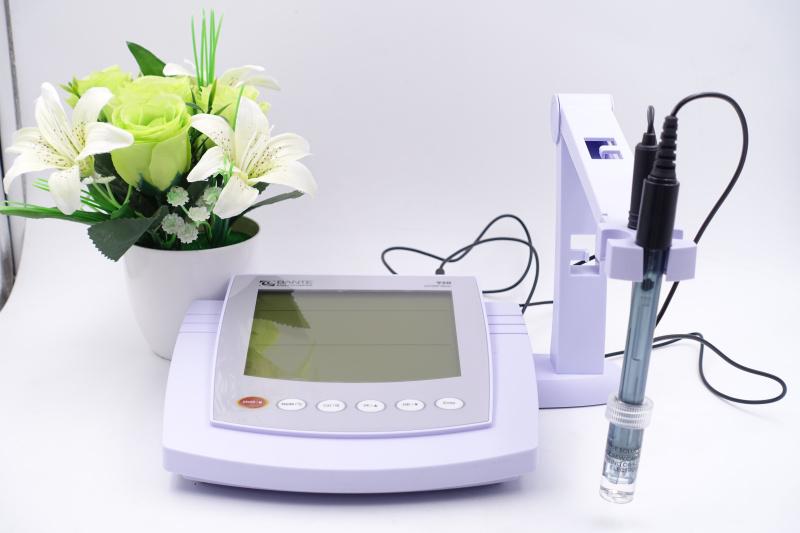
The laboratory ORP meter, officially known as the Redox Potentiometer, is an instrument specialized in measuring the redox potential in aqueous solutions or suspensions. It typically consists of a platinum or gold electrode as the indicator electrode, paired with a reference electrode (such as a silver/silver chloride electrode), and the potential difference is displayed by a high-impedance millivoltmeter. This value directly reflects the electron activity of the solution system—in other words, it depends on whether the liquid is "electron-deficient" or "electron-rich."
Principle
The core principle of the ORP meter is based on the Nernst equation. When the indicator electrode is immersed in a solution containing redox pairs, electron exchange occurs on the electrode surface, generating an electric potential related to the redox state of the solution. The difference between this potential and the reference electrode is the ORP reading (usually expressed in millivolts mV). For simple redox reactions, such as Fe3+ + e- ⇌ Fe2+, the Nernst equation can be written as:
E = E° + (RT / nF) · ln ([oxidation state] / [reduced state])
Here, E is the measurement potential, E° is the standard electrode potential, R is the gas constant, T is the temperature (Kelvin), n is the electron transfer number, and F is the Faraday constant. In actual measurement, the ORP meter directly outputs this E value. The positive potential means the solution tends to oxidize (absorb electrons), while the negative potential means the solution tends to reduce (donate electrons). Temperature compensation is crucial in this stage, but some older instruments require manual adjustment.
Measurement method
The ORP meter must be calibrated before measurement. The standard practice is to use standard ORP solutions prepared with pH 4.0 and pH 7.0 buffers (usually containing quinone, hydroquinone), or directly using commercially available ORP standard solutions (such as 222 mV or 468 mV standard solutions). Calibration steps: Immerse the electrode in the first standard solution, and after the reading stabilizes, set it to zero; Then add the second standard solution and adjust the slope. Make sure the electrodes are kept clean; if there is oil film or contaminants on the platinum surface, the readings will be unpredictable. When measuring the actual sample, insert the cleaned electrode into the solution to be tested, gently stir for 10-15 seconds, and after the reading stabilizes for 30 seconds, record the data. For samples containing suspended solids or viscous materials, filtration or dilution must be done first; otherwise, the electrodes are easily smeared.
Case study
There is a water treatment laboratory that tests the redox state of industrial circulating water. Their water quality fluctuates due to chlorine levels, with ORP readings jumping from 200 mV to 650 mV, with irregular cycles. According to standard HJ 746-2015 methods, they monitored three times daily using laboratory ORP meters. It was found that when readings fall below 400 mV, iron bacteria begin to grow in the water system; Above 500 mV, the corrosion rate accelerates significantly. Although the brand wasn't specified, operators reported that the old electrode response was slow, and after switching to the new platinum electrode, the balancing time was reduced from 3 minutes to 45 seconds. This small improvement has doubled their daily inspection efficiency.
Application:
Laboratory ORP meters are most commonly used in areas such as water quality monitoring, food fermentation, plating solution control, and environmental analysis. In drinking water treatment, ORP can be used to assess disinfection effectiveness—for example, when using chlorine disinfection, ORP above 650 mV usually means thorough bacterial elimination. In winemaking, it monitors the reduction status during fermentation to help control oxidative off-flavors. Another lesser-known application is soil chemistry research, where it evaluates the valence state transitions of heavy metal ions. Of course, whether these things are accurate largely depends on electrode maintenance and sample pretreatment. If the electrode is soaked in dirty water and forgotten to be cleaned, the next day's readings will crash for you.
Selection
When choosing laboratory ORP timing, first look at the electrode type: platinum electrodes are highly universal, gold electrodes are suitable for environments containing sulfides. Looking at the reference electrode, the dual salt bridge design reduces pollution and extends lifespan. The recommended range is generally 2000 mV± with a resolution of at least 0.1 mV. Temperature and automatic compensation functions must be paired; otherwise, a 10°C temperature change may cause readings to deviate by tens of millivolts. Additionally, the waterproof rating and screen backlight are quite useful for occasional splashes in the lab, and you don't have to go for top-tier specs. Finally, don't just look at the main unit—check the accessories: are the electrode wires long enough, the bracket is stable, and the calibration fluid is rated for your usual needs. Some cheap products come with a bunch of generic reagents, so it's better to just buy reliable standard solutions.