
Definition
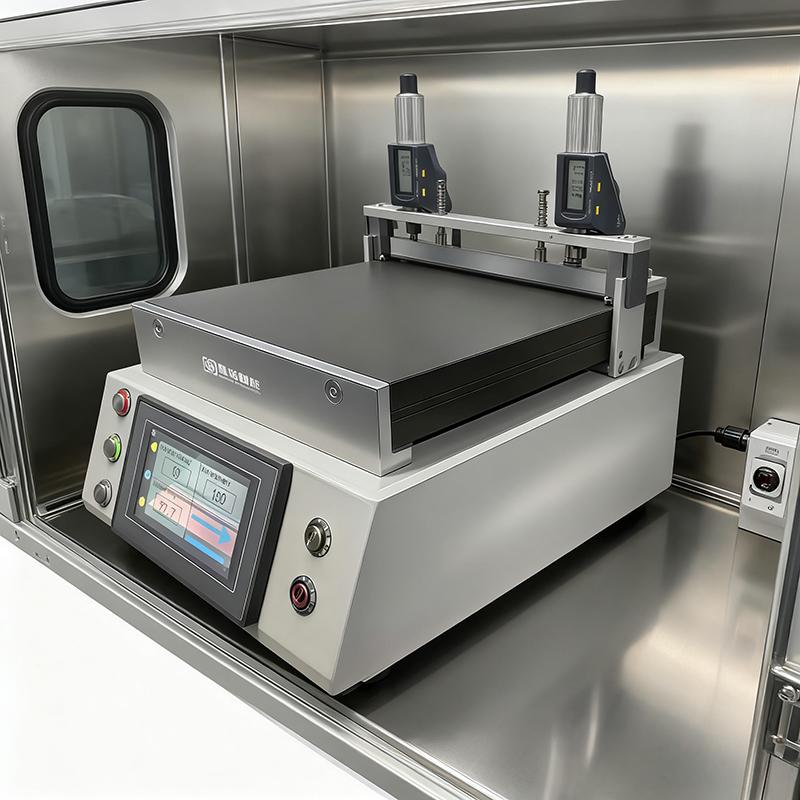
A laboratory film applicator, also known as an automatic film applicator or prepper, is a precision equipment designed to uniformly and repeatably coat liquid or paste samples (such as coatings, inks, adhesives, resin slurries, etc.) on flat substrates (such as glass plates, metal plates, paper, films) on a laboratory scale. Its core mission is to eliminate human errors caused by changes in speed, pressure, and angle during manual coating, so as to prepare coatings with precise and controllable wet film thickness and uniform large areas. These coatings are primarily used for subsequent physical property tests, such as the evaluation of hiding force, color, gloss, abrasion resistance, adhesion, and drying or curing behavior. Through the standardized sample preparation process, it provides a reliable data foundation for quality control and new product research and development in coatings, inks and other industries.
Principle
The working principle of the automatic coating machine in the laboratory is based on relative motion and gap control. The core composition of the equipment typically consists of a smooth coating platform, a drive that moves at a constant speed (such as a thrust bar or energy chain), and a coating head that determines the thickness of the coating film. The workflow is to secure the substrate to be applied on the platform and place the appropriate amount of liquid sample on the edge of the substrate or in front of the coating head. The coating head then moves along the platform at a set constant speed, scraping the sample into a continuous wet film through the precise gap formed between the coating head and the surface of the substrate.
According to the control method of wet film thickness, its working principle is mainly divided into two types:
1. The principle of coating of the wire winding rod: A Coater that uses a stainless steel wire that is precisely wound around a steel rod. The thickness of the wet film is determined by the diameter of the winding, and the calculation formula is:h = k · d, among them h representative theoretical wet film thickness,d represents the diameter of the steel wire,k is an empirical coefficient related to the winding method (usually about 0.1-0.2). Excess sample flows through the grooves between the lines, leaving a coating of the exact thickness.
2. The principle of scraper coating: Use a scraper with a precision grinding edge as the coating head. The vertical clearance between the blade of the scraper and the substrate platform is set by mechanical adjustment (e.g. digital micrometer), which directly determines the thickness of the wet film. This method is suitable for thicker coatings or samples with higher viscosity.
Measurement method
When preparing samples using laboratory coating machines, key measurement and control parameters directly determine the final quality of the coating film.
Preset of wet film thicknessis the primary goal. For the winding rod, the operator needs to select the wire rod corresponding to the wire diameter according to the required wet film thickness. For scrapers, by adjusting the high-precision differentiator and directly setting the gap value, the thickness adjustment accuracy of modern equipment can reach the micron level (e.g., ±0.001mm).
Coating speedis an important process parameter. Adjustable coating speeds (e.g., from 1 mm/s to 500 mm/s) allow researchers to explore the impact of shear rates on material rheological behavior and final film properties. Constant speed is a prerequisite for ensuring the longitudinal uniformity of the coating film.
Coating pressureCritical in certain coating methods. While standard wire rods or scrapers rely on their own gravity or rigid fixation, in certain designs, quantifiable, repeatable pressure is applied to the coating head through weights or other mechanisms to ensure close contact with the substrate, especially on somewhat elastic substrates.
Environmental and substrate control: Modern equipment often integrates auxiliary functions to precisely control sample preparation conditions.Vacuum adsorptionIt can flatten substrates such as paper and film on the platform.Heating functionIt is used to study the drying of coatings at specific temperatures, the curing process or the coating of hot-melt materials.
Key factors affecting the quality of coating film
Even with automated equipment, there are still multiple factors that can affect the quality and consistency of the final coating.
Properties and treatment of substratesis the foundation. The surface tension, cleanliness, flatness, and water absorption of the substrate directly affect the spread and adhesion of the coating. Any oil or dust can cause the coating to appear shrink or uneven.
The state of the coating headIt is the guarantee of accuracy. If the trunking of the winding rod is blocked or worn, and the scraper blade is chipped or slightly deformed, it will cause streaks or uneven thickness of the coating film. Therefore, it is crucial to wash it promptly and thoroughly after each use.
Rheological properties of the sampleIt is an internal factor. The viscosity, thixotropy, and solids content of a sample directly affect its flow and leveling during scraping. High-viscosity samples may require slower coating speeds or larger coating gaps, while low-viscosity samples may experience edge effects due to excessive fluidity after coating.
Stability of equipment parametersIt is an external condition. The stability of the transmission system, the precision of the speed control and the levelness of the platform together form the basic physical environment of the coating process. Any small vibration during the operation of the device can leave marks on the wet film.
Applications in the coatings and inks industry
Laboratory applicators are indispensable tools in R&D and quality control in the field of coatings and inks, and their applications run through multiple parts of the product life cycle.
inFormulation development stageThe researchers used the coating mechanism to prepare coatings of different formulation systems to systematically study the effects of changes in substrates, pigments, additives and other components on the gloss, color, hardness, flexibility and covering power of the coating. By preparing highly repeatable coating samples, the comprehensive performance of newly developed coatings can be scientifically evaluated and a better formulation combination can be screened.
inPerformance testing and quality controlfield, this device is a powerful tool for implementing numerous national and international standards such as ASTM D823. Whether it's determining the contrast ratio of coatings, evaluating the coloring power of inks, or testing the peel strength of adhesives, it is necessary to first prepare a wet film with a precise and uniform thickness. The automatic film Coater ensures the standardization of every sample preparation process, so that test results are comparable between batches and laboratories.
In addition, it is also used for:Simulate and validate the final application effect。 For example, by adjusting the coating parameters, specific industrial coating processes (such as the film thickness effect of roller coating or spraying) can be simulated on a laboratory scale, providing a reference for process parameters for actual production.
The basis for the selection of equipment
Choosing the right lab film applicator takes into account the application needs, sample characteristics, and future development of the laboratory. The selection process should revolve around the following core dimensions.
Match the application target to the sample typeis the first principle. If the core task is to test the basic physical properties of coatings, a general-purpose device with both rod and scraper modes that can cover a range from thin coatings (e.g., a few microns) to thick coatings (e.g., hundreds of microns) is often ideal. If you are focusing on a specific area, such as lithium battery paste coating, you need to focus on whether the equipment is suitable for high-viscosity, particulate slurries and may require heat-drying capabilities.
Coating accuracy and reproducibilityis the core indicator. It is necessary to pay attention to the speed control accuracy claimed by the equipment, the thickness adjustment accuracy of the coating head and the stability of the transmission system. High-precision servo motor drives and precise coating heads are the basis for repeatable results. For laboratories involved in the testing of product color, gloss, and other appearance properties, the uniformity of the coating film is particularly high.
Adaptability of substrate type to sizeCareful consideration is required. The size of the coating platform and the effective coating area of the equipment determine the size of the sample that can be processed. The device should be compatible with commonly used A4 or A3 size standard test papers or plates. If you often work with flexible film or easy-to-slide paper, you must choose a beltVacuum adsorptionFunctional models. If special or thicker substrates are used, it is necessary to confirm the substrate fixation method and the maximum allowable thickness of the equipment.
Ease of operation and expandabilityIt's about long-term experience. Modern equipment mostly adopts touch screen control, supports multi-speed and multi-stage travel programming storage, which brings great convenience to standardized operation. Also, whether it is neededHeated coating table、Drying deviceorUV curingand other extended functions, which should also be forward-looking evaluated according to the current R&D direction and future planning.
In summary, the value of laboratory film coating machines as a bridge between material formulation and physical properties is to provide a stable and controllable sample preparation platform. An in-depth understanding of its working principle, key factors affecting quality, and scientific selection methods is an important prerequisite for researchers in coatings, inks, and other industries to obtain reliable experimental data and promote technological innovation.