
In product development and quality control in coatings, inks, new energy and other industries, wire stick Coaters have become indispensable tools in laboratories due to their precision and efficiency.In the experimental research and performance test of various materials, whether the coating film with accurate thickness and uniformity can be prepared directly affects the accuracy and reliability of subsequent experimental data.As a commonly used coating preparation tool in the laboratory, the wire rod applicator uses stainless steel wires of different diameters to wrap on precision steel rods, and uses the gap between the wires to control the thickness of the wet film, which solves this problem for researchers and engineers.
01 What is a wire rod applicator?
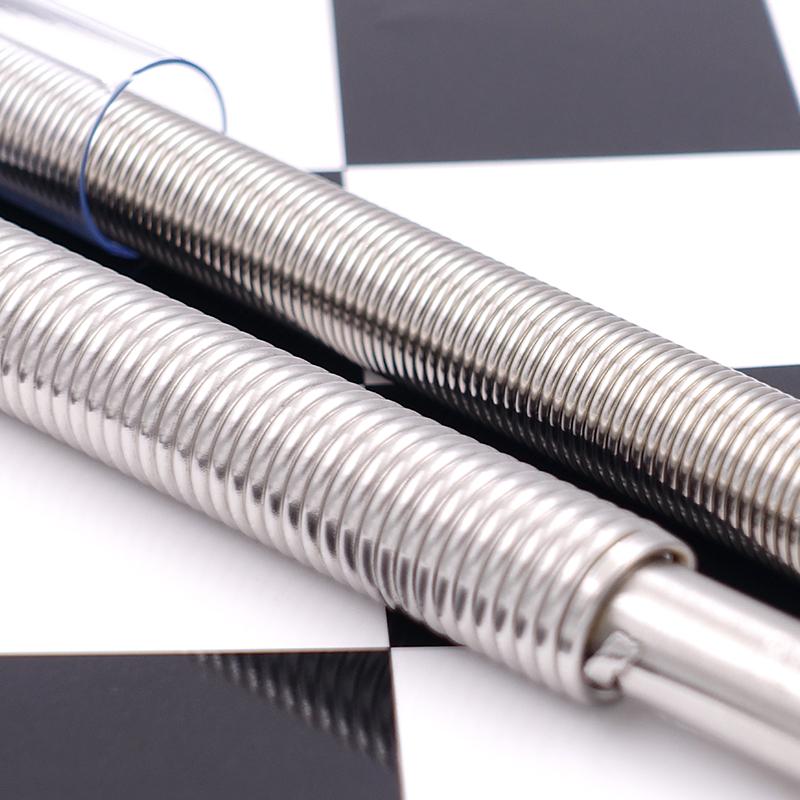
A wire rod applicator, also known as a wire rod applicator, is a specialized appliance used to prepare coating films on different substrates. It works very cleverly:
Through stainless steel wires of different diameters, they are wound on stainless steel rods of a certain diameter and length, and the gaps between the wires are used to prepare coating films of different thicknesses.This design allows each wire rod to prepare precise wet film thicknesses, ranging from a few microns to hundreds of microns, meeting the coating needs of most laboratories.A complete set of wire rod applicators usually consists of parts such as rod body, bracket, platen and handle. During operation, the selected rod is placed in the bracket, fixed with locking screws, and then the experimental paint is poured on one end of the specimen, and the hand-held applicator is pulled at a constant speed and pressure to form a uniform coating film.
02 Wide range of applications
The range of applications of wire rod applicators is extremely wide, covering almost all industries that require precision coating.
In the fields of coatings, inks, and paints, wire rod applicators are used to determine the covering force, color, or prepare samples of specimens. Different colors of coatings require the preparation of different thicknesses of wet films, and the consistency of coating film thickness on the same specimen and the comparison specimen is a prerequisite for accurate testing on wet films.For soft substrates such as paper, leather, and textiles, wire stick applicators are particularly suitable. These materials are more prone to deformation when coating than hard glass or steel plates, and the design of the wire rod applicator minimizes human error and ensures the quality of the coating film.The field of new energy, such as lithium battery pole sheet coating, is an important application direction of wire rod Coaters. The coating quality of the battery electrode directly affects the performance and safety of the battery, and the wire rod applicator can provide precise coating thickness control to meet the needs of high-standard production and research and development.

03 Technical characteristics and advantages
Wire stick Coaters are highly favored in laboratories due to their many technical features and advantages.
Precision control is the core advantage of wire rod Coaters. Different coatings need to prepare different thicknesses of wet film, and the wire rod applicator can not only choose the thickness of the coating film arbitrarily, but also eliminate the error caused by humans to the greatest extent.This precision control allows experimenters to conduct wet and dry film tests under the same conditions and obtain reliable results, thereby improving product quality and performance.Simplicity of operation is another big advantage. When using a wire rod applicator, just choose the appropriate rod according to the thickness of the dry film you need, fix it and pull it evenly. This intuitive operation greatly lowers the barrier to use, allowing even novices to master it quickly.The wide range of applicability also makes the wire stick applicator an essential tool in the laboratory. It is not only suitable for hard substrates such as glass plates, steel plates, aluminum plates, wooden boards, plastic plates, etc., but also for coating films on soft substrates such as paper, leather, and textiles.The basic wire rod applicator is relatively affordable, and a set of wire rods usually contains a variety of specifications, which can meet different thickness needs and is cost-effective.

04 Operation and use guide
Proper use of the wire stick applicator is key to achieving precise coating, and here are the basic steps:
First of all, you need to prepare tools such as wire stick applicators, trays, gasoline, soft brushes, high-grade toilet paper, scrapers, etc. According to the thickness of different dry films, different rods are appropriately selected.
Put the selected rod into the bracket, push into the pressure plate, and tighten the fastening screw.
Pour an appropriate amount of the experimental paint on one end of the specimen. Holding the applicator, lay the rod flat on the upper part of the paint end and pull it at a uniform speed. It is worth noting that different viscosities, different speeds, and different film thicknesses need to be selected and adjusted appropriately based on practical experience.
After use, loosen the screws, take out the rod, soak the rod in gasoline organic solvent, clean the paint with a soft brush and wipe it clean with toilet paper and put it in the box. Proper maintenance can extend the life of the wire rod and ensure the accuracy of each application.
05 Intelligent development
With the development of science and technology, traditional manual wire stick Coaters have gradually evolved in the direction of intelligence and automation. The emergence of automatic coating machines has greatly improved the efficiency and consistency of laboratory coating films.The automatic coating machine adopts two coating methods: wire rod and scraper, with a coating rate of 1~300mm/s stepless speed regulation and a coating thickness range of 0.1~10mm.These devices typically feature heating and vacuum adsorption, and the clamshell scraper head is easy to clean and suitable for high-precision coating of films.
The intelligent coating machine is suitable for coatings, inks, paints, pastes, lithium batteries, pressure-sensitive adhesives, resins, glues, polymer materials, pharmaceuticals, etc., and can be scraped on glass, cardboard, and fabrics.They are driven by servo motors for stable operation; Touch screen control, easy to operate; Greatly improve the accuracy and efficiency of laboratory coating films.
06 Selection suggestions
Faced with various models of wire rod applicators on the market, how to choose the right product is crucial.
Consider the thickness range
Different models of wire stick applicators cover different thickness ranges. For example, RDS wire rod applicators have wet film thicknesses ranging from 7 μm to 300 μm, and choosing the right range based on common coating thicknesses is key.
Consider the coating width
The coating width of the wire rod applicator is usually between 150mm and 300mm, and choosing the right width can improve material utilization and avoid unnecessary waste.
Materials and craftsmanship
The high-quality wire rod and winding are made of wear-resistant stainless steel, which not only ensures the accuracy of coating, but also extends the service life of the product.
Brand and after-sales
Choosing reputable brands and suppliers, such as professional platforms such as Nanbei Chao Mall, can not only ensure product quality, but also obtain good after-sales service. As a vertical online direct sales mall focusing on coatings and ink testing instruments, Nanbei Chao Mall is committed to using "Internet +" to improve the service level of industry market transactions.
With the continuous development of material science, the requirements for coating film quality will also become higher and higher. Whether it is the evolution from traditional manual wire rod Coaters to automation and intelligence, or the application expansion in new energy, new materials and other fields, the wire rod Coater will continue to play an irreplaceable role.It bridges the gap between laboratory research and industrial production, making precise coating no longer a technical bottleneck.


