
Definition of coating thickness gauge
A coating thickness gauge is a class of measuring instruments used to measure the thickness of a material's surface covering layer non-destructively. In industrial production and materials science, overlays often refer to metallic or non-metallic coatings applied to substrates to impart specific properties such as corrosion resistance, wear resistance, decorativeness. Accurately measuring the thickness of these coatings is critical to assessing product quality, controlling production costs, and ensuring process compliance. The instrument senses and quantifies the difference in physical properties between the substrate and the coating, converting it into a readable thickness value.
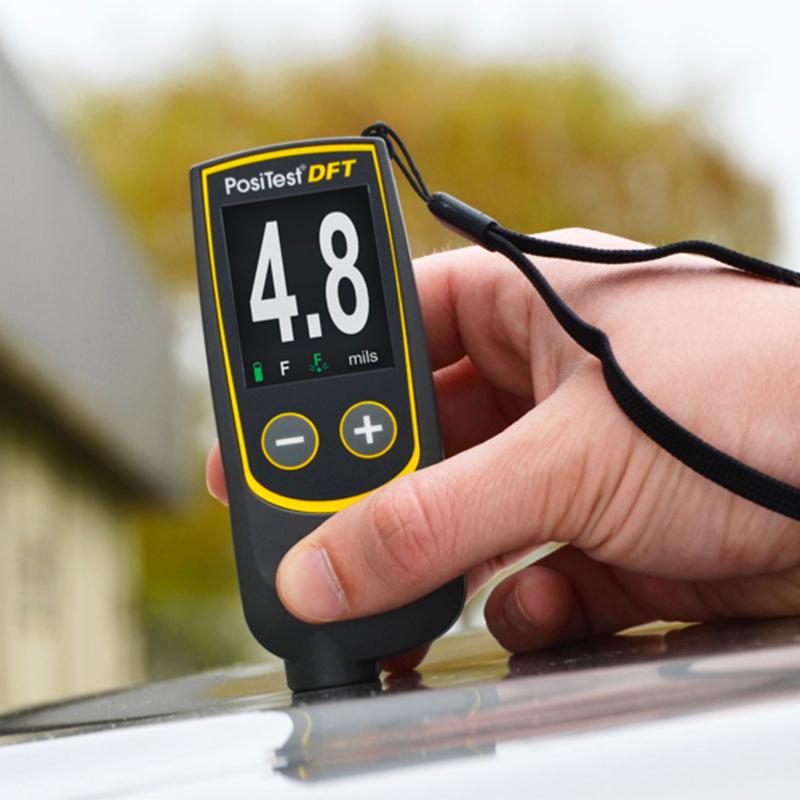
Measurement principle
At the heart of a coating thickness gauge lies the way its sensor interacts with the object being measured. According to the coating and substrate material, the physical principles behind it are mainly divided into two main categories: magnetic induction principle and eddy current principle.
Magnetic induction principle:This principle is suitable for measuring the thickness of non-ferromagnetic coatings (e.g., paint, plastic, chromium, zinc) covered by ferromagnetic substrates (e.g., steel, iron). The probe in the instrument creates a closed magnetic loop. When the probe comes into contact with a coated magnetic substrate, the non-magnetic gap formed by the coating causes a change in the magnetic resistance of the magnetic circuit, which in turn affects the magnetic flux or the induced EMF of the coil. By measuring these changes and converting them according to specific mathematical relationships, the thickness value of the coating is obtained.
Eddy current principle:This principle is applicable to measuring the thickness of conductive non-ferromagnetic coatings (e.g., paint, anodized film) covered by non-ferromagnetic conductive substrates (e.g., copper, aluminum, austenitic stainless steel). The probe's mid-to-high-frequency alternating current signals generate a high-frequency alternating magnetic field around the coil. When the probe is close to the conductive substrate, eddy currents are induced inside the substrate. The reaction magnetic field generated by this eddy current weakens the magnetic field of the original coil and changes the impedance of the coil. The thicker the coating, the greater the distance between the probe and the substrate, the weaker the eddy current effect, and the change in the coil impedance. The instrument determines the thickness of the coating by detecting this change.
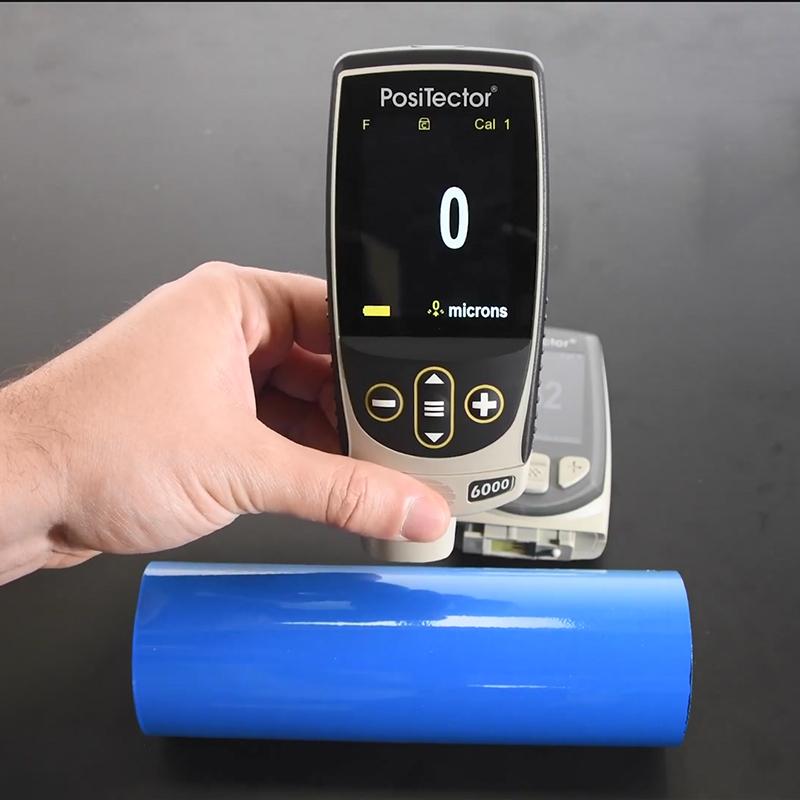
Measurement method
Although the physical principles built into the instrument vary, in actual measurement operations, a systematic set of steps is usually followed to ensure data accuracy and repeatability.
Instrument Preparation and Calibration:Before any measurement is taken, the instrument needs to be confirmed for status. This usually includes checking the battery level and whether the probe is in good condition. Calibration is a critical step before measurement, and the operator needs to zero and calibrate the instrument using a standard block of the same substrate material and a standard foil of known thickness. This process aims to eliminate systematic errors caused by instrument drift and probe wear to establish an accurate measurement baseline.
Measurement Operations:The calibrated probe is placed vertically and smoothly on the surface of the coating to be tested. The pressure applied should be moderate and constant to ensure stable physical contact between the probe and the coating surface without deforming or compressing the coating due to excessive pressure. Once the probe is stable, the instrument reads a measurement. For large workpieces, it is recommended to measure at several different locations and calculate their arithmetic average to more fully reflect the overall condition of the coating.
Data Logging and Analysis:Modern coating thickness gauges often have data storage capabilities. The operator can export the measurement data for subsequent statistical analysis, such as calculating standard deviations, maximums, and mins to evaluate coating uniformity and process stability.
Influencing factors
In practical application scenarios, the accuracy of measurement results can be interfered with by various factors. Understanding these factors helps operators make sound judgments and necessary corrections.
Substrate Properties:Changes in the magnetic properties of the substrate, such as the difference in permeability of different grades of steel, can affect the measurement accuracy of the magnetic induction method. Similarly, changes in the conductivity of the substrate can also have an impact on the results of the eddy current method. Therefore, it is recommended to recalibrate when changing substrates from different batches or materials.
Substrate geometry and thickness:A workpiece with a radius of curvature that is too small can cause distortion in the magnetic flux or eddy current distribution, often requiring the probe to be calibrated on a flat surface. The thickness of the substrate is also a key factor, if the thickness of the substrate is below a certain critical value, the magnetic field cannot be fully absorbed, resulting in a large measurement value that needs to be calibrated with the help of specific mathematical corrections or on a thick substrate that is homogeneous to the workpiece.
Coating properties:The electrical conductivity, magnetic conductivity of the coating, and its own physical structure also have an impact. For example, coatings containing metallic pigments may have some conductivity on their own, which can interfere with eddy current measurements. The surface roughness of the coating will also affect the measurement results, and the measurement value on the rough surface usually represents the local distance from the peak to the base, rather than the average thickness.
Environmental and operational factors:Changes in ambient temperature can affect the stability of electronic components. Strong external magnetic fields can interfere with electromagnetic fields inside the instrument. The operator's technique, such as the tilt angle of the probe, the speed of placement, and the contact pressure, are the main sources of human error introduced.
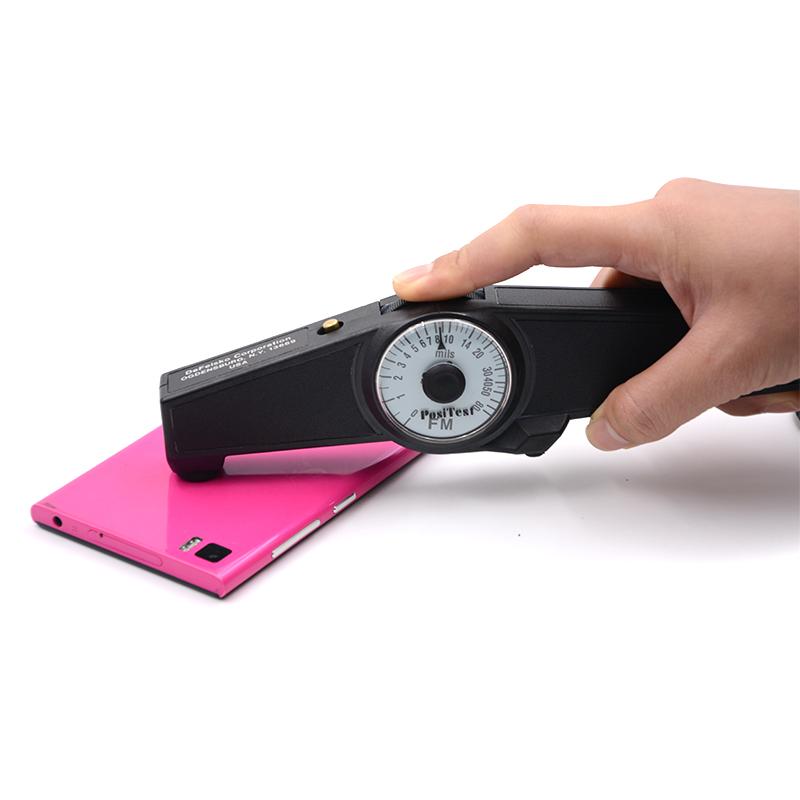
Applications
Coating thickness gauges are used in a wide range of industries that involve surface treatment.
Automobile manufacturing and shipbuilding industry:It is used to inspect the thickness of e-coats, midcoats, and topcoats in the body or hull, ensuring that the paint quality meets corrosion resistance and appearance requirements, while controlling coating costs.
Metalworking and anti-corrosion engineering:On steel structures, pipelines, storage tanks and other facilities, it is often necessary to apply zinc, aluminum or heavy anti-corrosion coatings. The coating thickness gauge is the core tool for quality acceptance by the construction party and the owner, which is directly related to the service life of the facility.
Electronics & Appliances Industry:It is used to measure the thickness of copper foil on the surface of printed circuit boards (PCBs), the thickness of solder masks, and the thickness of coatings on the pins of various electronic components to ensure the reliability of electrical connections.
Product quality inspection and material acceptance:Many metal raw materials (such as galvanized sheets, color-coated sheets) are required to come with a coating thickness report when they leave the factory. Downstream enterprises will also use coating thickness gauges for review during incoming inspections to verify whether the supplier's products meet the procurement technical specifications.


